


The shortcrust pastry for these Vegetable and Lentil Pasties uses a mix of white Spelt Flour (plain white flour) and Spelt Wholemeal flour, mixed vegetables for the filling, using what I could find in the fridge, plus some leftovers from a previous meal. I added a handful of red lentils to bulk it up and add texture.

Inspiration for making Vegetable and Lentil Pasties
The inspiration for this recipe came after visiting a wonderful bakery in Whitby called The Cornish Bakery on Church Street in the town centre. It’s just yards from the bottom of the 200 steps, or is it 199? leading up to Whitby Abbey. They sell lovely fresh cakes and savoury bakes, and you can sit down and enjoy a coffee or two before you climb up to the abbey and see the wonderful views across the town harbour and the sea.
Whitby is also the home of Whitby Jet, amazing sunsets and it’s the place where Captain Cook departed on HMS Endeavour to sail the south seas.
The beaches are spacious for families, dog walkers and those looking to find fossils. If you are lucky enough to find a 66 million year old fossil Ammonite - Link to Natural History Museum, on your first attempt at searching, try not to sound too excited next to someone who has spent years searching for one without success!
Ingredients and Possible Substitutions
This is just an overview of the ingredients I used to make this recipe, along with possible alternatives and why I may have used them. A complete list of ingredients and full instructions can also be found in the Recipe Card below.
For the Shortcrust Pastry
Spelt white flour - You could use plain or all purpose flour
Spelt Wholemeal Flour - or any wholemeal flour. Spelt has a nice nutty flavour, but you can use any wholemeal flour.
Butter - I always use unsalted butter, which means you can control the salt used in pastry making by adding it to your own taste.
Vegetable shortening such as Trex - I find using a mix of shortening with butter gives the pastry a lovely texture when baked.
Salt - crushed sea salt has more flavour
Egg - Organic and free range if possible.
Cold water - fridge cold makes better pastry. It helps keep the butter and shortening cold too.
For the Vegetable and Lentil Filling
Olive oil - this is used for frying - Vegetable oil is fine
Leeks - If you cannot get fresh leeks, chopped frozen leeks are fine.
Sweet Red Pepper - Fresh or frozen is fine.
Crushed sea salt
Cracked black pepper
Frozen mixed Vegetables - Try to get a mix of vegetables, containing carrots, peas, beans and sweetcorn.
Red lentils - Use according to the packet instructions.
Vegetable Stock cube - crushed. Omit if using vegetable stock.
Boiling water - Or replace the water with vegetable stock, omitting the vegetable stock cube.
Egg - for egg wash or use milk.
Step by Step Instructions
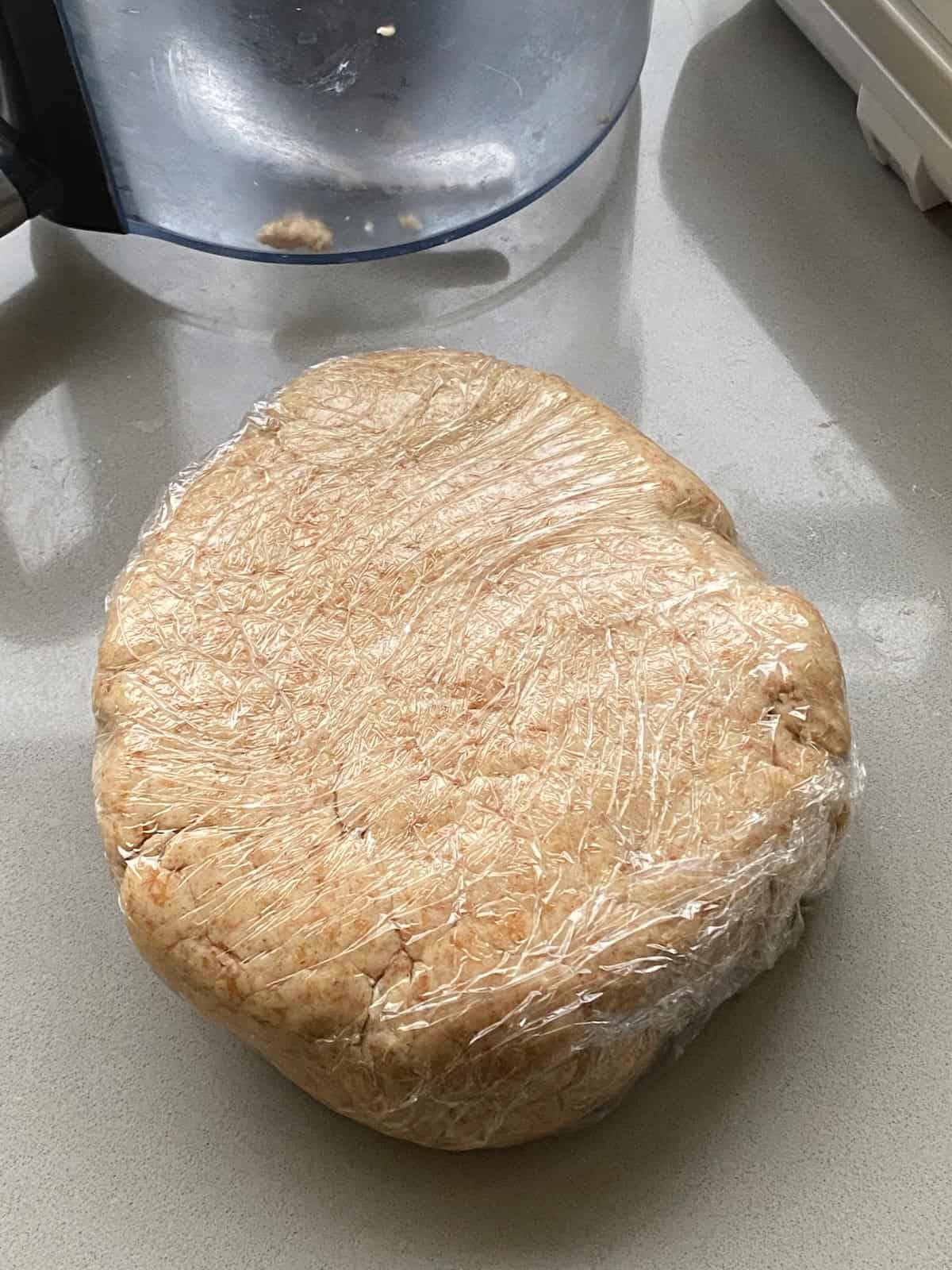
Make the Shortcrust Pastry
Step 1: Place the flour, salt, butter, and vegetable shortening into a food processor and blitz until the mixture resembles fine breadcrumbs.
Step 2: Add the egg and enough water, and mix until you have a smooth, firm ball of dough. Tip: Do not add all the water in one go. Only add enough to bring the dough together to a smooth dough.
Step 3: Flatten the dough a little and wrap it in cling film. Place it in the fridge to rest for at least 30 minutes.
Make the Vegetable Filling
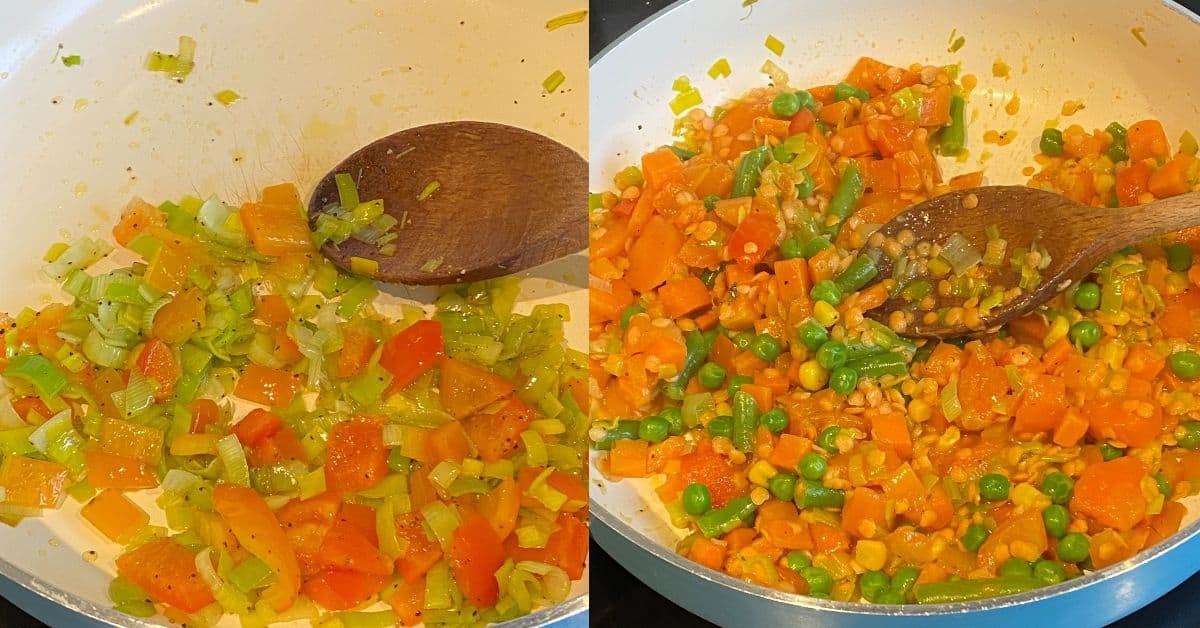
Step 1: Gently fry the chopped leeks and chopped sweet pepper in olive oil, and add the salt and pepper. Simmer until the leeks become translucent and the peppers have softened.
Step 2: Add the frozen vegetables, red lentils (according to the packet instructions), stock cube and boiling water. Turn up the heat and simmer until all the vegetables and lentils are cooked through and the stock cube has dissolved.
Step 3: Take the pan off the heat and leave the vegetable filling to cool completely.
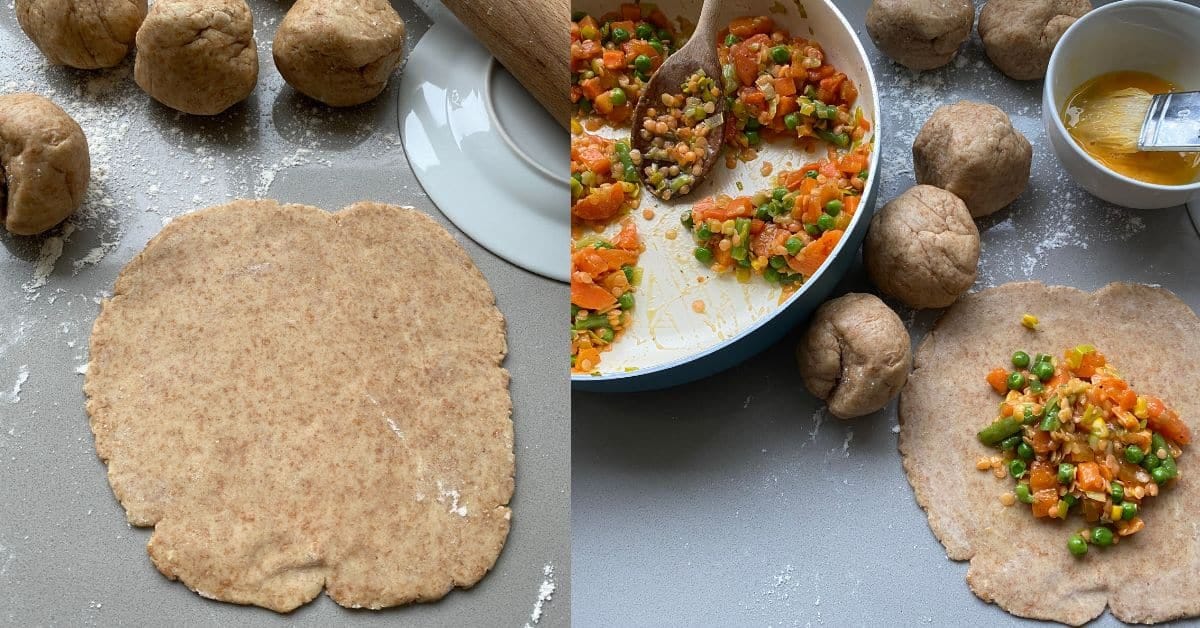
Step 4: Remove the pastry from the fridge and cut it into 6 equal portions. Roll each one out into a circle the size of a small plate about 7 inches across.
Step 5: Place a portion of the cold vegetable and lentil mixture into the centre of the pastry, leaving about 1 inch around the edge.
Brush the edge with water, and fold up so that the edges meet in the middle and on the top. Press the edges firmly together, making a decorated fluted edge with your fingers.

Step 6: Place each pastie onto a baking tray with a sheet of baking parchment, and place in the fridge for about 10 minutes for the pastry to rest a little before baking.
Preheat the oven to 180Cdeg (fan assisted oven).
Step 7: When ready to bake, brush each pastie with a beaten egg and cut a few slits in the pastry to allow any steam to escape during baking.
Step 8: Place the tray of pastries on the middle shelf in the oven and bake for 20 - 25 minutes or until cooked through and the pastry is golden.

Storage and Tips
Freeze - These pasties freeze really well. Wrap in suitable containers.
Tip 1 - Make the filling using any leftover vegetables or whatever you can find in the freezer or fridge.
Tip 2 - Do not add all the water to the pastry in one go. Only add enough to bring the dough together to a smooth dough.
Please let me know how you get on with this recipe, especially if you adapt it with your own filling.