



Please tell us a little about yourself, your publication and the story behind your vegetable garden.
A blackcurrant bush grew near the scary spider web covered rain barrel in the back garden, but I couldn’t stop myself from picking the tangy sour berries. I can’t remember ever not being interested in food growing; I could spot a fruit tree from a distance and I loved running my fingers through the patch of mint, and picking Alpine strawberries that hid amongst the flower beds. From growing food, to meeting farmers, questioning where our food comes from, and what we eat has been a steady journey. That’s the basis of my Substack; Writing about food through the lens of where it comes from and how it gets to us — the farm, the market, the supply chain, history, the seasonal reality.
Once a month, my publication, Queen of Markets has a roundup which includes what’s been happening in the community garden where I’m based, what we’re growing, picking, sowing.
How long have you been growing your own food and what does your garden look like today?
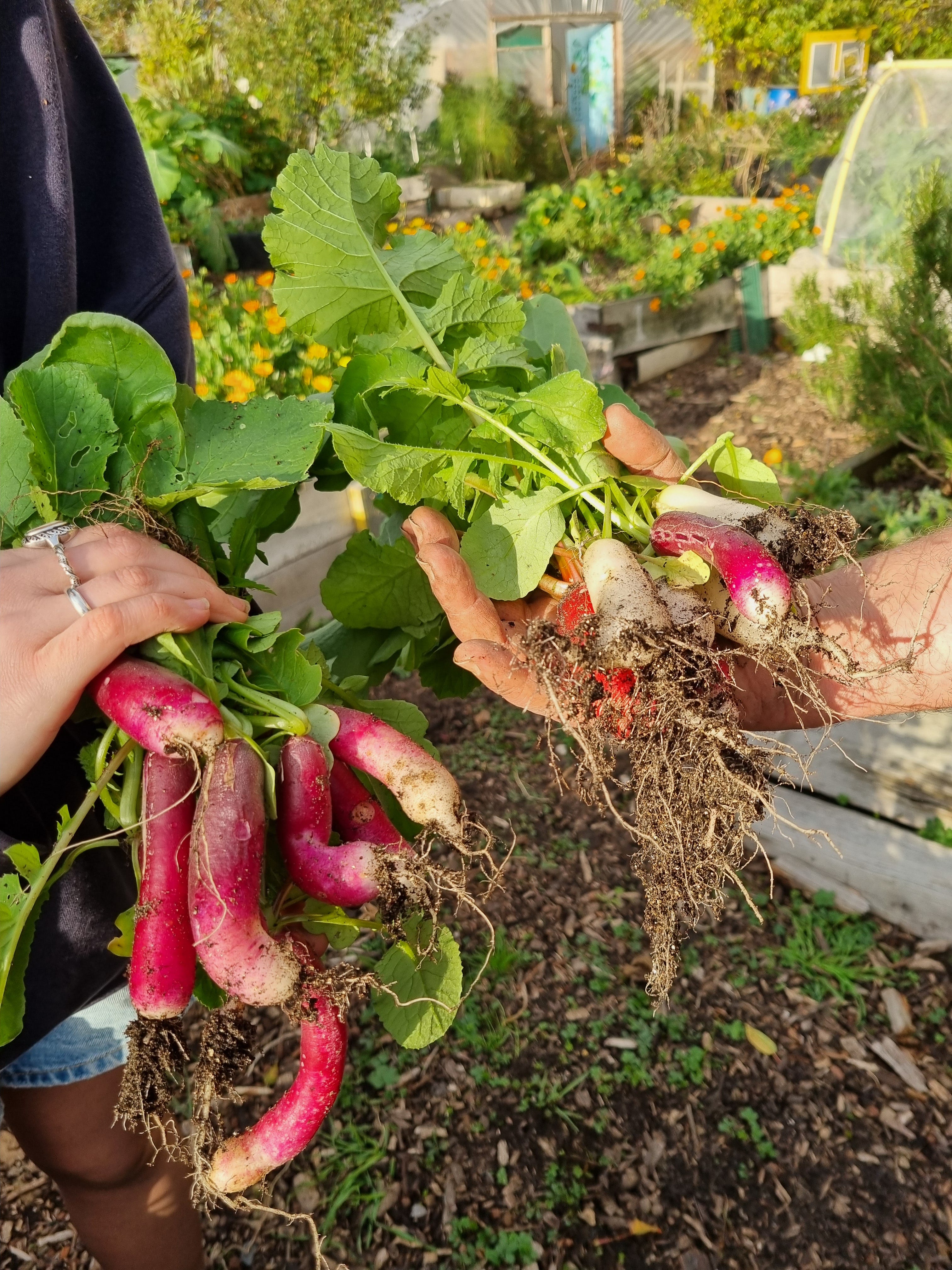
I’ve been part of Harmony Gardens in Tottenham, North London for around three years. I brought my personal philosphy; why grow anything boring that’s cheap to buy. Harmony Gardens has around 45 raised beds, an orchard avenue, a children’s garden with pond and fruit trees and a ‘leisure’ garden. We also have a poly tunnel in need of repair. Like everyone else, we’re subject to visits from foxes, molluscs, cats and human predators, who take it in turns to dig over beds, help themselves to produce and pull down nets.
What varieties of vegetables and/or fruit do you grow?
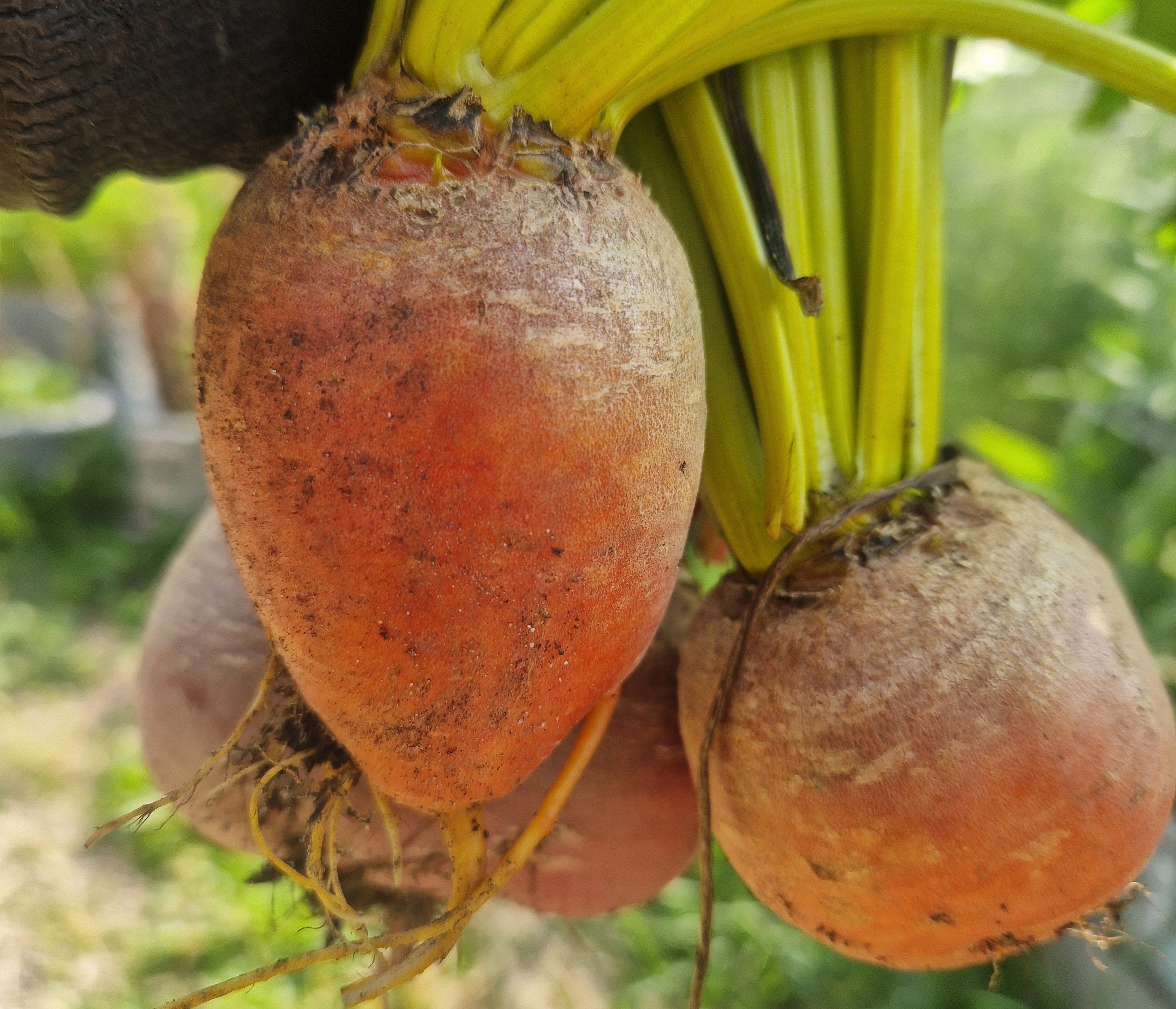
Anything that’s different, difficult or expensive to buy, a delight to grow. A simple example; golden beetroots. From supermarket experiences one would think that all beetroots are deep purple. There are bright yellow, white and stripy varieties too.
We’re aiming to grow as many perennials as possible. They develop deep root systems, replenishing the soil much more than an annual will and are better for droughts as ideally, they’ll be more resilient. Sadly many seedlings have died this year; the heat and drought has been too much for them.
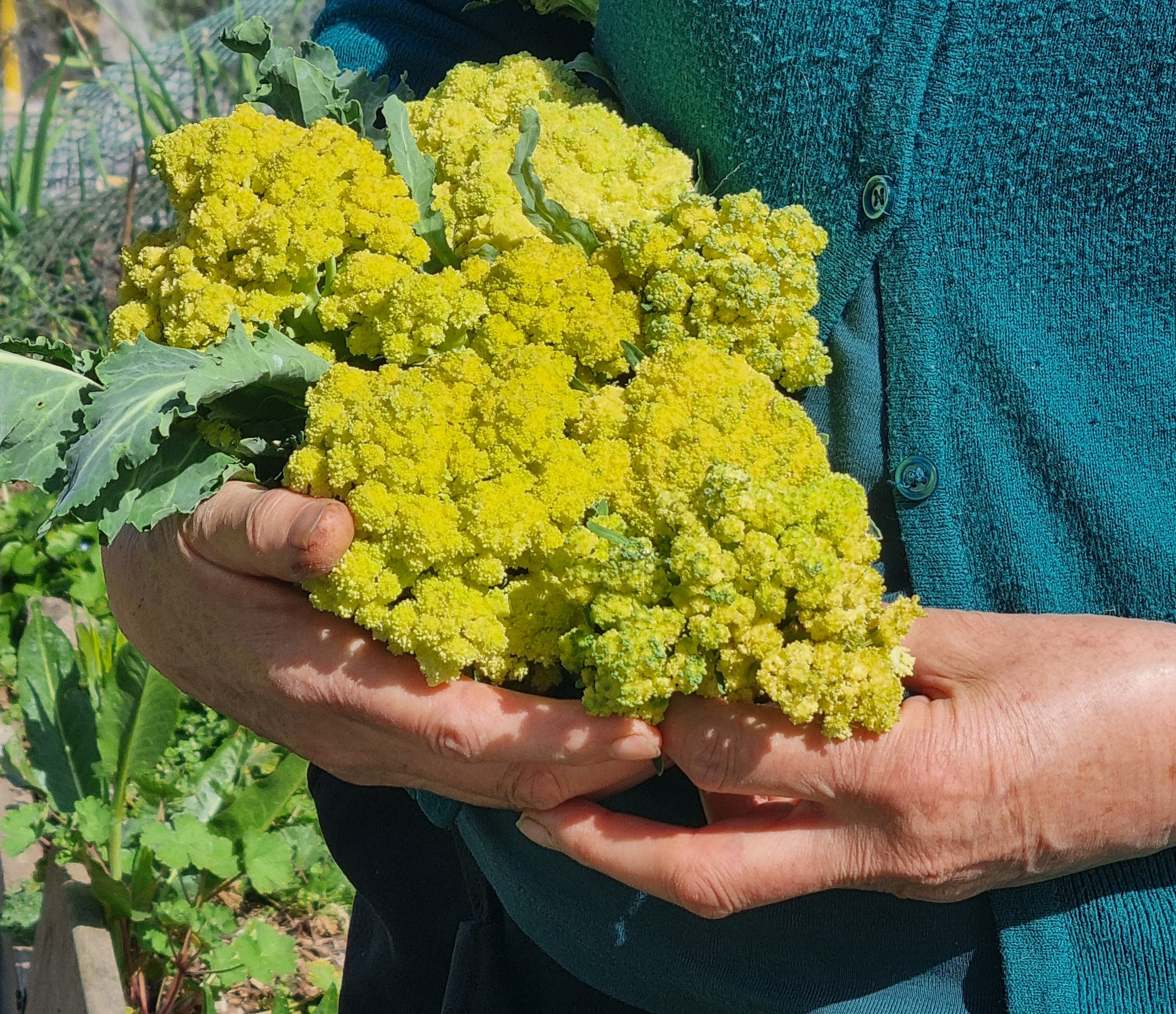
Last years two year old white sprouting broccoli finally took off, giving us heads that looked like cauliflower.
This year we’ve planted over two hundred types of vegetables and edible flowers, planted a new herb bed with more interesting varieties; society garlic, violet cress, Korean mint, mountain mint, ginger rosemary, orange thyme, lemon verbenna, anise, cola plant, hysop and more.
Our apple and pear trees were donated to us, many without labels so it’s guess work what they are. We have red, black and white currants, red and green gooseberries, goji berries…but for some reason our rhubarb keeps failing.
Last year we planted pea beans; a cross between a pea and a climing bean; they grew so well they’ve been planted again this year, performing much better than peas.
Collard greens, summer and winter squash, melons, aubergines, cucumbers, a range of chillies, Welsh onion, celeriac, globe artichokes, Jersey kale, red rubble kale, thousand headed kale…


What food do you grow that you are unable to find in the shops?
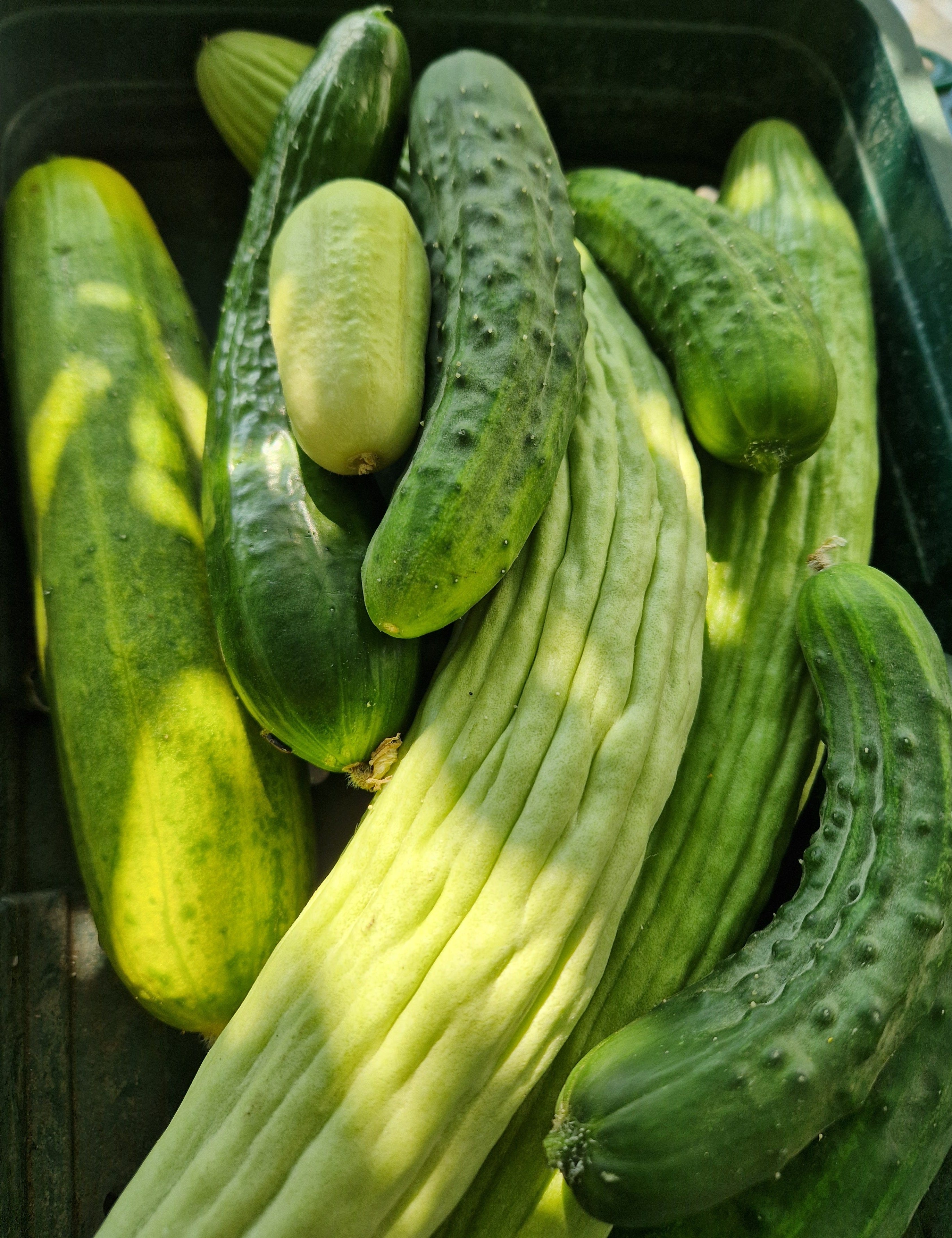
As above; white sprouting broccoli, golden beetroot, ruby kale, cucumbers that actually taste of something, patty pan squash, Grandpas’ cress, mangelwurzel, Welsh onion, kai lan, great tasting lettuces, rare tomatoes; anything that’s out of the ordinary.


What has been your biggest growing success and/or disaster?
Cime di rape; I love it, but if you don’t know what it is, it takes a little convincing. Difficult to find outside of Italy and farmers’ markets or specialist grocers, it’s one of my hungry gap favourites, a crop that’s a cross between turnip greens and sprouting broccoli with a hint of bitterness that pairs well with strong flavours. If planted in the wrong season, or the right season with the wrong weather, it’s likely to bolt very quickly, as it did this year, so we’ll be planting more in late August. Celtuce; a cross between lettuce and asparagus. We over sowed in one go this year, and we were late harvesting which means it was too bitter. I’ve just resown it for an Autumn crop.
Disasters; just one? I planted globe artichokes a few years ago and patiently watched them grow their first leaves, get stronger, taller, send up buds, only to find out that they weren’t globe artichokes, they were cardoons. I wrote about it HERE.
Which crop do you grow every year, and what is your favourite dish to make with it?
Everyone at the garden loves beetroots; not everyone loves the tops but I personally think it’s a crime to throw them away if they’re in good condition. I adore pink soup in the summer and sometimes add in the sautéed stems. If you read my interview with Anna Ansara, I shared two of her delicious summer recipes here, for beetroot, and tomatoes.
How do you plan your meals around the produce you grow?
We don’t grow enough to give us all a veg box for the week; it’s an added bonus. In the winter we have lots of chard, kale and cime di rape. Peak time like now, when tomatoes, cucumbers and summer squash are abundant, is one of the best times of the year. Tomatoes are too good to cook; I will make a quick gazpacho if I have all the ingredients to hand, a simple tomato salad, or an uncooked tomato sauce.
I freeze a few berries at a time until I have enough to make a granita or sorbet such as this one (scroll down to end of article).
How do you manage a glut of produce, what do you make?
At the moment our glut is beans; they’re popping out all over the place and we often don’t find them to pick until they’re too old to be cooked quickly. Then I love cooking them slowly until soft in an onion, garlic and tomato sauce spiced with cinnamon and cumin, maybe mint, and serving room temperature.


Do you have a compost? If so, what is the best way of getting the most out of composting and do you have any tips?
We have four compost bins and a hot box and we never have enough compost. Soil is everything; the right soil for the plant, and for seeds. Use seed compost not multipurpose when planting seeds otherwise the nutrients in multipurpose will send your seedlings shooting up; making them leggy. We make teas from nettles and comfrey too and don’t use any chemicals apart from the occasional ‘organic’ slug pellets; we’ve tried most everything else; it’s them or us. Mulch, use green manure, do everything you can to look after your soil.
What is one piece of advice you would give to someone who wants to start growing their own food?
Pick something that’s different, unusual, and expensive to buy. It depends upon the size of your garden or plot. If you have the space; cime di rape is a great winter into hungry gap vegetable. Buy seeds from small independent seed nurseries and don’t be afraid to complain if most, or all your seeds fail. Look out for seed swaps in your neighourhood and if you want to collect your own seeds; I recommend taking a look at The Real Seed Company’s advice page.
Succession planting is key if you don’t want a huge harvest all at once. Sow a few seeds every few weeks.
Many thanks to Cheryl for telling us about her community garden.
If you found this article interesting, subscribe and read more > Cheryl Queen of Markets.
Lovely Cheryl does great things with growing at Harmony Gardens. Great choice of productive, unusual varieties of food crops.