



Please tell us a little about yourself and your publication, Eating and Feeding?
When I retired from cancer care at the Mass General Hospital here in Boston, I became aware my friends were either overwhelmed about what’s nourishing to eat or had gone down the path of restriction. They were omitting gluten or dairy or jumping onto the Whole 30 diet bandwagon. I became very attuned to how food mythologies had taken the joy and connection out of a good meal.
I, myself, have an insatiable appetite, and with my husband and two children in their 20’s, we’ve made lasting memories cooking together and exploring the world through food. I’m 64 now. As both a pediatric and adult cancer survivor myself, having faced serious illness, I wanted to share the balanced eating that both allows me to celebrate life and keeps me in good health.
When away from work and science, I was a weekend leisure cook fortunate to be able to take classes from early career restaurant chefs here in New England like Ken Oringer, Cara Chigazola Tobin, Michael Schlow, and Melissa Kelly. I’d spend Saturdays cooking 5-course meals for friends and family and plotting food pilgrimages. Food writing was a natural progression. I write ‘palatable’ magazine-style stories following my own curiosities about global foods, food zeitgeist, gem destinations, and emerging nutrition science, always weaving in something valuable, especially recipe strategies, readers can apply in their kitchens.

I believe truly that eating for prevention of dementia, heart disease, diabetes, and cancer (now rising sharply in our young people) can jive with eating creative and adventurous food. I felt I could use my research skills to help build the nutrition literacy folks wished their physicians had more time to support. I show how to focus one’s efforts when shopping, sourcing, and adapting restaurant-quality cooking at home, helping folks become more intuitive and intentional over when to moderate and when to indulge.
When I began oncology care in the 1990’s, a colon cancer diagnosis before age 50 was rare…that’s no longer the case. Type 2 diabetes and hypertension were diseases of adults… not ten year olds. I want readers to know it is possible to eat to reduce risks of chronic disease without sacrificing the pleasures of food.
Because these are primal ways we come to care for ourselves and our families, I called my Substack Eating and Feeding —- it rings of how we come to know each other’s cultures and how we foster the next generation.
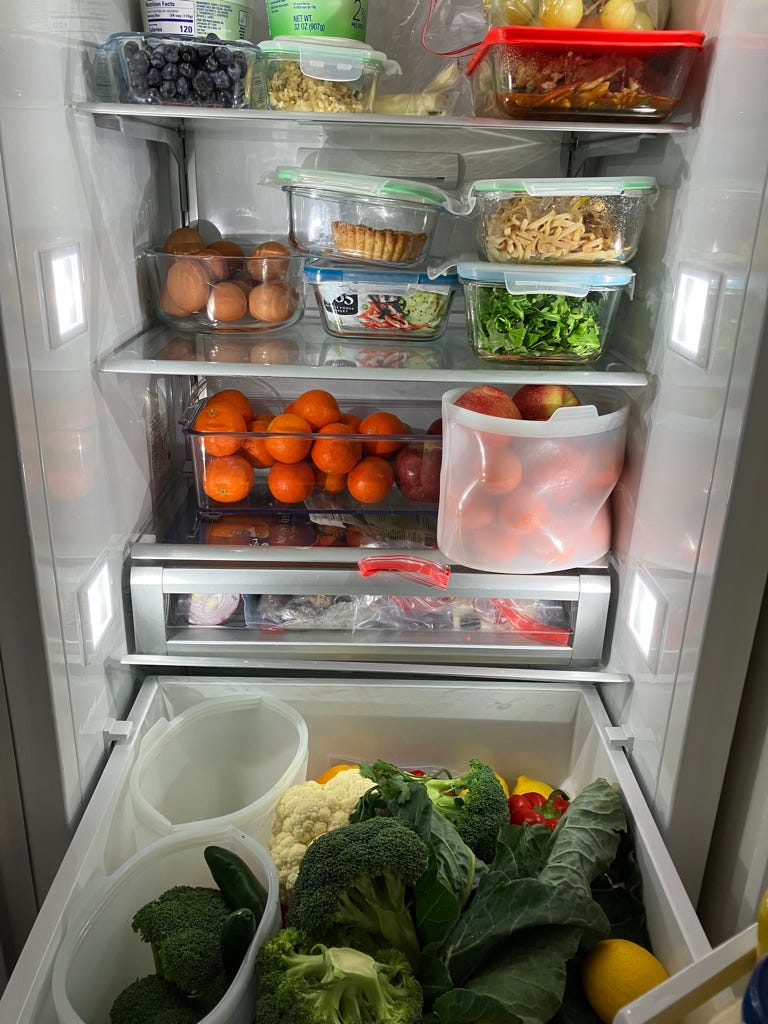
What kind of fridge do you have?
I’m a side by side girl. I have two 7 foot columns, one fridge and one freezer side. I prefer this which keeps more at eye level over a top/ bottom arrangement. Much of what I buy is fresh and perishable. I make sauces from scratch, so I don’ t need a lot of real estate for open bottles of dressings and barbecue sauce. My fridge has got an irascible personality all its own; it’s been whining and purring in the heat of this summer. I called my repairman, Percy, and, of course, it went completely mum when he arrived. I’m hoping it won’t fail me. It’s full of produce that I pick up at the farmer’s markets or get in my CSA box. Here in New England, we limp through the Spring mud season awaiting the short growing months for stone fruit, pole beans, leafy greens, and my favorite Silver Queen corn. The rest of the year, the diversity of produce found in supermarkets is very uninspiring, so I’m like a kid in the candy dime store when all those heirloom tomatoes are peak.
How often do you food shop? Do you buy in bulk - if so, what do you buy?
The week the pandemic hit, as a doc, I was able to forecast the situation. I immediately bought a freezer for the basement which has been a game changer for turning out meals more easily. I batch cook dinners and portion baked goods (that’s my downfall,) I bake and freeze lower sugar muffins and freeze desserts guests bring as gifts when I‘m entertaining. Storing them out of sight to defrost a piece at a time keeps me out of trouble.
I’m not a fan of bulk buying, but I’ve become more disciplined about food shopping to keep down trips to the store. There’s a terrific New Yorker cartoon by Harry Bliss ——the police are investigating the scene of a lethal accident at Costco…
A gargantuan jar of ‘all natural’ mayonnaise has rolled off a pallet shelf flattening a sobbing wife’s middle-aged husband, the pastor already arrived to administer last rites. That snapshot says so much…
I find buying in bulk usually ends up fighting goals of balance and moderation. You feel compelled to use what you’ve purchased. Plus, bulk foods by nature tend to be made more shelf stable with additives. Supermarkets are highly structured to promote impulse buying. I’ve taken to click and pick up shopping. Loading my cart virtually allows me to spend more time comparing ingredient labels, sodium content, and price (and spares me coming home with the extra stuff I never intended to buy.)
Much of the Eating and Feeding messaging is about creative uses for produce, fish, and whole grains and a little less meat. My principles are grounded in the EAT-Lancet recommendations for health, an evidence-based pattern of eating to reduce chronic disease and to respect the sustainability of agriculture, husbandry, and fishing.
Weekly, I buy fresh produce including plenty of greens and herbs to stock my drawer. Cruciferous vegetables like broccoli, Brussels, and cauliflower and beets, turnips, and radishes can last to the end of the week kept uncut. I keep a supply of baba ganoush, almonds and walnuts, and marinated herring to snack on. The pantry is always stocked with various vinegars to brighten vegetables; fish sauce, low sodium soy, and shaoxing cooking wine; pomegranate molasses, and capsicum spices like Aleppo, Kashmiri, and chipotle to keep things interesting. I stock up on whole grains, dried spices, and dried fruits and always keep beefsteak or cherry tomatoes on the counter. That lets me turn out dishes like Fasolakia Ladera (Velvet Green Beans Simmered in Olive Oil with Tomatoes) or Bulgur Tabbouleh with Cucumbers, Mint, and Dried Cranberries, regulars in our rotation, and get creative like with Za’atar Chicken with Mushrooms, Farro, and Roasted Grapes (that was delicious!) with what I have on hand.
What is the most used ingredient that you always have a good supply of?
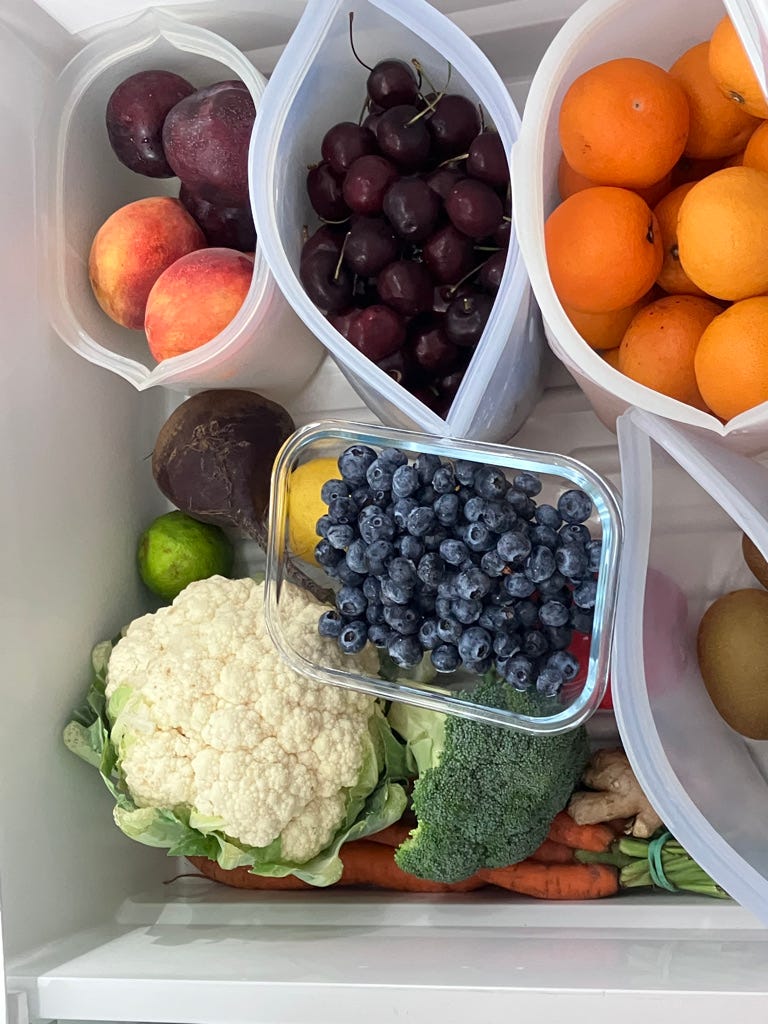
You can always find a container of Greek yogurt in my fridge—-that and lots of fruit- cherries, berries, clementines, grapes, plums, and kiwis- to snack on!
Yogurt really is a privileged food in terms of health which I’ve written about in Will eating yogurt make you live to 100? If not my breakfast with blueberries, it boggles me how many uses I find in dishes like Turkish Poached Green Eggs in Hot Garlicky Yogurt (Cilbir) or Chermoula-Roasted Cauliflower & Yogurt Sauce. I can rapidly assemble Pear, Blueberry, and Cardamom Yogurt Parfaits and it’s my preferred fat with plant oils when baking Golden Chai and Summer Squash or Zucchini Chocolate Chip Muffins for the kids. The acid adds great leavening and tenderizes the crumb. For easy entertaining, a dollop of labneh (made from straining 2% Greek yogurt) tops my Swiss Chard Torta di Bietole with Dark Cherries or Roasted Beets with Labne and Pistachios. My son loves a big, gloppy spoon of it over braised kale or eggs with fresh herbs. Yogurt is definitely the hardest working item in my fridge.
What is the oldest item/ingredient in your fridge, and what did you originally buy it for?
I have a tub of active dry yeast way in the back on the top shelf. My college-aged daughter bought it 2 years ago to teach my son how to bake when home on break. I have such sweet memories of them dancing around the kitchen together baking challahs and popovers. I feel I’ve done my parental duty teaching them how to enjoy cooking for themselves and to share the moment. Every empty nester will understand why I haven’t brought myself to throw it out. (Apparently, yeast is best stored in the freezer, but you can try blooming it even after six months.)


Do you meal plan? If so, would you please share your secrets with us?
There can be so much emotional inertia to meal plan, but once you get over the hurdle, like exercise, the rewards are great. I’ve written about how ‘think ahead’ strategies can de-stress your evenings and save your relationship. I make a general plan as I shop online targeting at least two meals each— fish, plant, and poultry—weekly. To get buy in from my crew, my ‘healthier’ cooking had to compete with their favorite take out foods, and I think we’ve had nearly ‘restaurant’ quality meals at home. When my younger went off to college, I had my glory when he conceded at Thanksgiving break, “I didn’t realize how good the food is here.”
For ease, I batch cook and freeze components of meals like chicken for stir fry, oven-baked eggplant slices, and sauces that can become building blocks for a variety of meals. I feel planning ahead can make best use of ingredients with less waste, especially when perishable produce is my mainstay. I’ve written menu plans for solo households and busy college kids that build each meal on last night’s prep. I’m very much an improvisational cook who will repurpose leftovers to stretch one meal into several.
What is the most expensive item in your fridge, and what do you use it for?
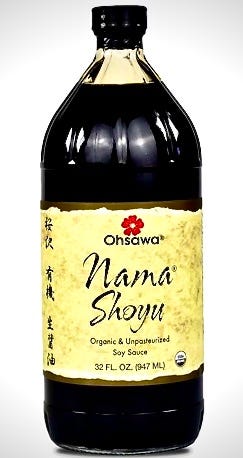
I read in Nancy Singleton Hachisu’s memoir/ cookbook, Japanese Farm Food, that her preferred shoyu is an unpasteurized, artisanal “live” brew and became obsessed.
Using certified organic and traditional fermentation practices, Yamaki Jozo ages soybeans and mountain spring water for two years in cedarwood kegs. Here in the US, the Yamaki Nama Shoyu is distributed under the Ohsawa label. I visited Harie, a mountain village of ‘living waters’ in Japan a few years back which left an indelible impression on me. The Japanese conception of satoyama (里山) respects the area between mountains and arable land as a shared resource for people, animals, and nature to equally thrive. You see this in the care taken to produce rice, vegetables, and source food in Japan which, ultimately affects flavor, so different and more complex than commercially-produced food. I’d much rather spend to support small family producers, regenerative farmers, and artisanal bakers who do food with care than on caviar and champagne.
Which items would you advise people not to keep in their fridge and why?
Perhaps a list:
Fresh herbs like basil and mint sit in a tall glass of water, stems down, on my kitchen counter to preserve the aroma (I refrigerate cilantro and parsley because of the high rate of foodborne illness like cyclospora); Winter squash gets sweeter over three weeks at room temperature as starches break down, potatoes in the refrigerator can result in increased acrylamide during cooking, these go like onions and garlic in a dry, dark spot to avoid sprouting; chocolate in the fridge loses moisture turning chalky; never avocados because these are never ripe from the market; and I’d never spoil a summer peak tomato’s umami by placing it in the cold.
How do you organise your fridge? Is it chaos, or a place for everything and everything in its place?
An organized fridge gives such a sense of peace and calm. But, I assure you, mine doesn’t always stay so orderly. If you were here, it would look like an infinite ‘loop’ video of me attempting to organize —-dairy top shelf (nearest expiration dates forward); eggs and leftovers second shelf, fruit (the heavy stuff) first shelf—-while the husband and kids wreak havoc (or leave empty containers) torpedoing my efforts. The bottom-most drawer is for raw poultry, beef, and fish. I am a bit immunocompromised, so we take extra care to avoid cross-contamination, and we keep eggs away from raw produce as shells can harbor salmonella. But, I’d advise anyone to take these precautions.
What are your top tips for storing items in your fridge and keeping it tidy? Do you use storage containers?
I generally remove food from packaging and deli wrap before storage in the fridge. I worked with The Silent Spring Institute, an environmental toxicology group focused on reducing breast cancer risk, so I often write about reducing endocrine disruptor and other exposures. Time in packaging increases opportunity for leaching of antistatic agents and grease-proofers that typically contain perchlorates and PFAS forever chemicals with potential to migrate. I’ve shifted to storage in glass, and I really like these silicone ‘bowls’ (photo above) for produce. Their wide mouths make it easy to grab fruit for snacking, and they do well in the dishwasher. The data on microplastics and human health is emerging. I’ve written about why I chose paper composite for my microplastic-free cutting board swap, and how to think about microplastic ‘health’ claims. I’ve been encouraging the kids to be aware that cans of seltzer are lined with plastic polymers and to drink from their stainless water bottles or buy seltzer in glass when they can. We live immersed in a plastic-world, so we can’t eliminate them but we can be smart about when they are worth the convenience.
Thank you for sharing your Fridge with us Ellen Kornmehl MD. All images are copyright of Ellen.
Read more interviews and Q&A series.
If you are a food writer and would like to be part of this Q&A Fridge series, please email Lynn. Thefoodstak@gmail.com with the subject header Q&A Fridge series.
This was a great read and I’m a big fan of Ellen’s work. And I’m such a fan of this series. Well into year 2 in Portugal, I’m trying to calm down and not snap things up when I see them (for fear of not seeing them again) but I have a condiment problem. Since we have limited space and a European-style fridge-freezer (as opposed to what’s known here as American-style), we’re in the market for a second, auxiliary set up for wine and condiments. Then maybe I can be more organized :) I’m inspired by Ellen’s methods.
So much to think about in this article! I'm inspired to eliminate the many jars of condiments and sauces that take up way too much space in my refrigerator to make more space for fresh produce and quality proteins. Making and freezing homemade sauces is a brilliant idea!