



Q: Please tell us a little about yourself and your publication.

Julia: I’ve been a Foreign Correspondent in different countries and have travelled extensively which piqued my interest in unfamiliar cuisines. Tabled gives recipes about a specific ingredient I focus on each week but where relevant, it informs you about how Big Food influences our appetites for its own profit and often our worse health, with facts it would prefer you not to know.
Q: What kind of fridge do you have? Fridge freezer/Upright/ Double doors?


Julia: My fridge is a small under-counter fridge with an ice box.
Q: How often do you food shop? Do you buy in bulk? If so, what do you buy?
Julia: Two or three times a week at the local large supermarket or the Middle East stores on the same street and the market stalls outside them. I don’t bulk buy because I don’t have enough storage space.
Q: What is the most used ingredient that you always have a good supply of?
Julia: Lemons.
Q: What is the oldest item/ingredient in your fridge, and what did you originally buy it for?
Julia: Full fat natural Greek yogurt a week old, which I use for everything from a cumin-flavoured salty lassi to tzatziki, and add to tahini paste to make a quick Middle East sauce for roasted eggplant or eat with a juicy peach and drizzled with a good honey.
Q: Do you meal plan? If so, would you please share your secrets with us?
Julia: When my children were at school, I had to meal plan as I had a full-time job. I’d do a big cook at the weekend of sauces and soups, a batch of shortcrust pastry, and a huge stew or similar which could change into meat pasties or stuffing for roasted peppers or a sauce for pasta and other things for as long as it lasted. At that stage, I had a single door upright fridge with freezer drawer beneath. Once they left for college, the fridge went, too.
Q: What is the most expensive item in your fridge, and what do you use it for?
Julia: I have a pot of goose fat for roasting potatoes and usually a smoked cod’s roe which turns quickly into taramasalata for a summer dip with vegetables or warm pitta bread, or is wonderful just peeled and spread over hot malted-granary toast with a squeeze of lemon and a pinch of cayenne pepper.
Q: Which items would you advise people not to keep in their fridge and why?
Julia: If you are British or European, don’t put eggs in the fridge as they won’t last as long. Eggs are covered in a cuticle, a natural waxy coating which seals the shell, locking out bacteria. It is illegal in the EU to wash eggs and they will keep on the counter 2-6 weeks. In the US, however, eggs are washed so must be kept in the fridge. I wouldn’t put tomatoes or berries in the fridge as the cold breaks down the membranes and harms the enzymes that produce their flavour. There is no need to put jars of anything made with vinegar in a fridge as vinegar is a preservative.
Q: How do you organise your fridge? Is it chaos, or a place for everything and everything in its place?
Julia: Since it’s so small, I have to keep it organised. But that’s no challenge as I buy so little. Veg and fruit go in the produce drawer (with a tea-towel wrapped box of Neuhaus truffles at the moment!), dairy products in the door shelves. Fish and meat on the shelf that currently is empty as I’ve cut eating both right back.
Q: What are your top tips for storing items in your fridge and keeping it tidy? Do you use storage containers?
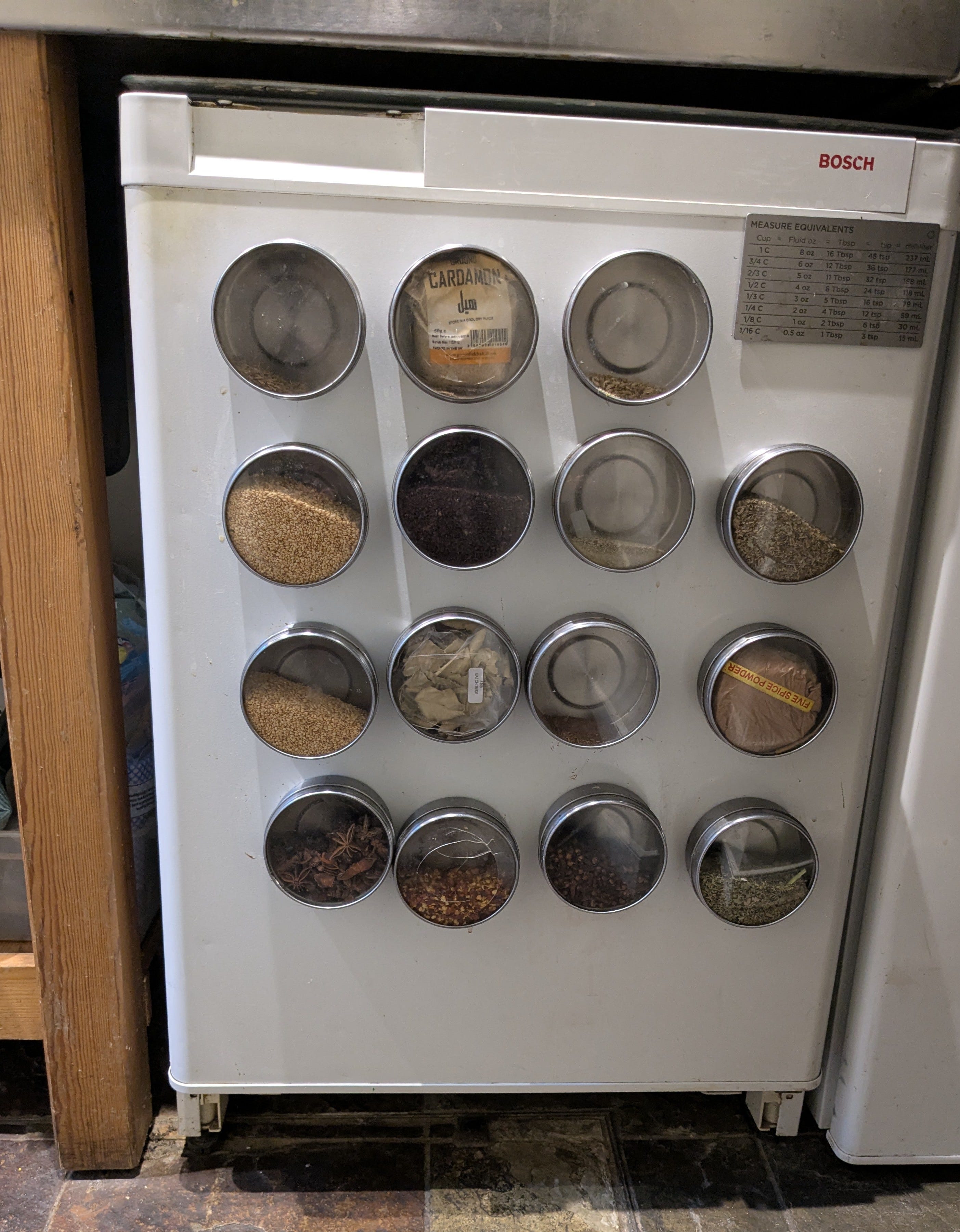
Julia: Containers are handy if you stuff your fridge, especially those with coloured lids, as you can more easily spot stuff without emptying the whole shelf. Whenever I’m at a hotel that puts shower caps in the bathroom, I bring them home to cover bowls of food (making sure they’re taut and don’t touch the food).
IKEA is a great resource for well-designed containers. I keep all my dried goods, like flour, sugar, pasta, and pulses, in glass jars, and my spices in the magnetic containers stuck to the fridge door.
Many thanks for sharing your fridge with us Julia Watson
Visit and subscribe to Julia’s publication Tabled.
All images are copyright of Julia Watson.
Read more interviews and Q&A series
If you are a food writer and would like to be part of this Q&A Fridge series, please email Lynn. Thefoodstak@gmail.com with the subject header Q&A Fridge series.